

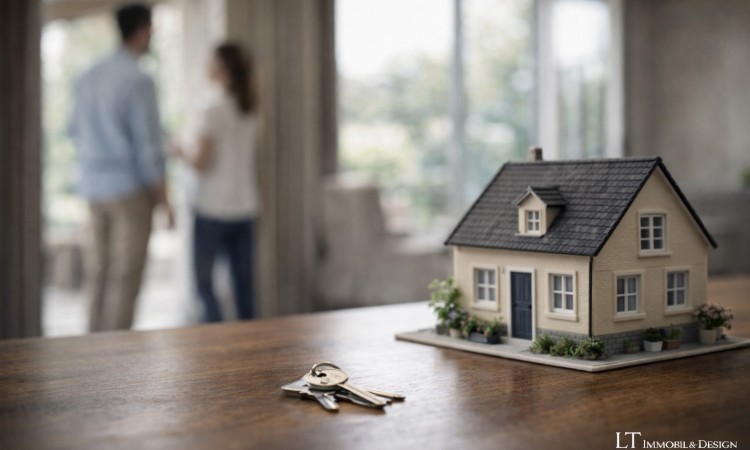
Why Some Homes Sell Quickly
Why Some Homes Sell Quickly The market immediately recognizes value when price, perception, and strategy are alignedIn the real estate market, some properties remain listed for months, while others receive a concrete offer within just a few weeks — sometimes even after the very first viewings.
At first glance, it may seem that the difference depends only on the quality of the property itself. In reality, the dynamic is far more complex.
Homes that sell quickly are not always the largest, the newest, or the most expensive.
Very often, they are the ones that enter the market with the right balance between accurate pricing, perceived value, and buyers’ expectations.
This balance is what strongly influences the speed of a sale.
The moment a property enters the marketEvery property, when first listed, goes through a phase of maximum exposure.
Active buyers constantly monitor the market: new listings, new opportunities, and homes to compare.
It is during this early stage that a property receives the highest level of attention.
If a home immediately appears aligned with market expectations — in terms of features, price range, and presentation quality — it quickly enters the narrow group of properties buyers seriously consider.
And this is often where the first negotiations begin.
In real estate, the first impression can directly affect the time a property remains on the market.
Clarity of positioningA home that sells quickly is almost always a home that clearly communicates its value.
Buyers need to immediately understand:
- what type of property they are looking at
- what needs it may satisfy
- why it deserves attention compared with other available alternatives in the same area.
When communication is clear — professional photography, coherent descriptions, organized documentation, and a credible price — the presentation of the property becomes a true decision-making accelerator.
Clear perception reduces uncertainty.
And fewer doubts often mean faster decisions.
The role of comparison in the real estate marketBuyers rarely make decisions in isolation.
Every property is compared with others in the same location or with similar characteristics.
When a home stands out in that comparison — because of its balance between quality, location, layout, and pricing — the probability increases that it will become one of the few serious options under consideration.
This is where a significant part of real estate selling strategies comes into play.
A competitive property more easily turns viewings into negotiations.
The perception factor: value is not measured only in square metersOne of the least visible aspects of the real estate market is perception.
Buyers do not purchase only square footage, location, or the number of rooms.
They buy a combination of elements, including:
- natural light
- harmony of spaces
- internal layout
- surrounding environment
- future potential
- overall feeling.
When these elements convey balance and coherence, the value of a property becomes easier to perceive.
And a memorable home often tends to sell faster.
Documentation and trust: the detail that can accelerate a saleOne often underestimated factor is documentation.
When planning compliance, cadastral records, certifications, and technical details are already clear and verifiable, the buyer’s decision-making process becomes smoother.
Trust reduces friction.
And in real estate, fewer obstacles often mean a more fluid negotiation.
LT Immobili & Design’s perspectiveIn our daily work, we often observe that the speed of a sale rarely depends on one single factor.
It is the result of alignment between:
accurate pricing, strong presentation, ready documentation, and a well-planned market-entry strategy.
When these elements work together, a property has a much greater chance of quickly turning buyer interest into a concrete negotiation.
Because in the real estate market, the speed of a sale does not happen by chance.
It happens when the market immediately recognizes the true value of a property.
