

Why a House Doesn’t Sell: The Real Reasons Behind a Stalled Property
Why a House Doesn’t Sell: The Real Reasons Behind a Stalled Property
When a house doesn’t sell, the first reaction is almost always the same:
“The price must be too high.”
It is a comforting explanation.
Simple.
Immediate.
But in the real estate market, reality is rarely that linear.
Understanding why a house doesn’t sell means looking beyond the asking price. It requires analyzing timing, perception, positioning and strategic alignment.
And often, the answer is more nuanced — and more revealing — than one might expect.
Time Is Not Neutral
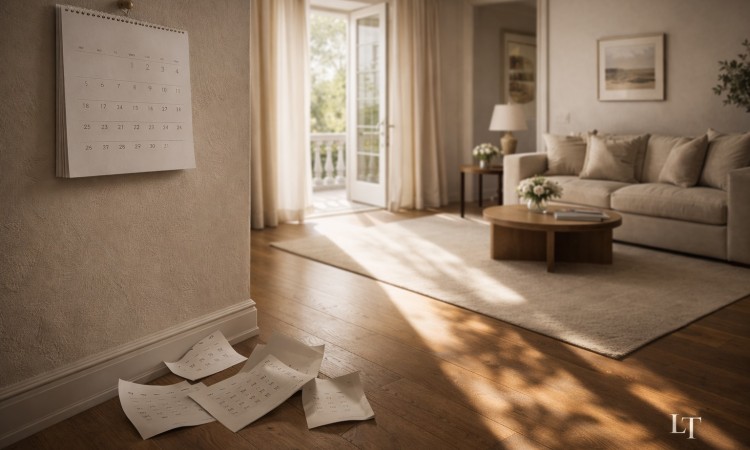
The moment a property is launched on the market, it begins communicating.
The first days are crucial.
The property is new. It is observed. It is compared.
If inquiries are weak or viewings are limited, the market is already sending a signal.
When a home remains listed for too long, perception shifts.
Regardless of its technical quality.
In real estate, time is not neutral.
It carries meaning.
A property that lingers on the market is rarely seen as “waiting.”
It is seen as “less desirable.”
Visibility Is Not Positioning
Many properties are online.
Very few are truly positioned.
Publishing a listing is not the same as building a strategy.
Positioning is deliberate:
• Identifying the correct target audience
• Defining the right language
• Highlighting key strengths
• Choosing the right moment to enter the market
When a house doesn’t sell, exposure is rarely the real issue.
Direction is.
Perception Drives Decision
In lifestyle-driven markets such as Versilia, emotional response plays a decisive role.
Buyers are not simply purchasing square meters.
They are purchasing light, atmosphere and context.
If these elements are not clearly conveyed — visually and narratively — they remain invisible.
And what is invisible does not create decision.
Often, when homeowners ask, “What should I do if my house doesn’t sell?” the deeper question is whether the market has truly perceived its value.
Price Is a Consequence, Not the Starting Point
It is tempting to reduce everything to a number.
But price alone does not sell a property.
A fair price within a weak strategy loses momentum.
A coherent price within a structured vision gains response.
Understanding how to sell a house successfully is not about lowering expectations.
It is about alignment.
Price, perception, presentation and timing must move in the same direction.
The Perspective of LT Immobili & Design
When we analyze a property that struggles to sell, we do not start with the number.
We begin with the foundation:
• Is the documentation complete and verified?
• Is the positioning coherent?
• Is the visual presentation aligned with the target audience?
• Is the timing appropriate for the current market?
Most often, when a house doesn’t sell, one of these elements is out of balance.
The market is not unpredictable.
It is selective.
And when all components work together, response follows.
The Market Rewards Coherence
A property sells when:
• The price reflects reality
• The perception is correct
• The strategy is structured
• Timing is carefully managed
There is rarely a single reason why a house remains unsold.
There is usually a combination of overlooked details that slow down the result.
Selling well is not about luck.
It is about method.
And method is built before publication — not after frustration begins.
