

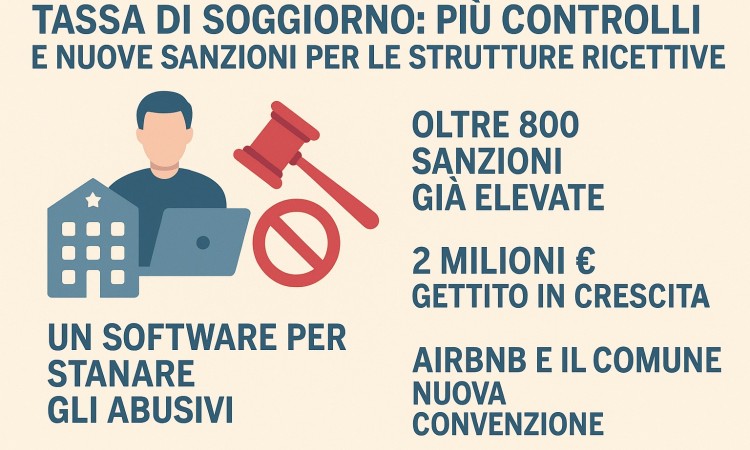
Tourist Tax: Increased Controls and New Penalties for Accommodation Facilities
Tourism remains one of the main economic drivers for Italy’s art cities, but along with opportunities come greater responsibilities for accommodation providers. In Lucca, in recent weeks, municipal offices have intensified checks on the proper collection and reporting of the tourist tax, with the goal of ensuring fairness and transparency.
Over 800 penalties already issued
In recent months, more than 800 reports have been filed for irregularities linked to the management of the tourist tax: from the failure to submit quarterly reports of guest presence, to the non-payment of the levy by some establishments.
This is not limited to small operators: larger and more structured businesses have also been sanctioned for delays or omissions in registration.
A software to track down unauthorized rentals
Starting in September, a new digital system will be implemented to cross-check data from different sources, including online platforms such as Airbnb. The aim is twofold: on the one hand, to crack down on “ghost” rentals not officially registered, and on the other, to streamline automated checks, reducing grey areas and ensuring steady municipal revenues.
Tourist tax revenue is growing
Despite these irregularities, 2024 has seen a significant increase in collections: more than 2 million euros raised, with growth of nearly 10% compared to the previous year. These funds are vital and are reinvested into services and tourism promotion.
Airbnb and the Municipality: the new agreement
An important role will also be played by agreements signed with intermediary platforms, such as Airbnb, which are committed to cooperating in data sharing and direct payment of the tax. This mechanism is expected to improve transparency and reduce the risk of tax evasion.
Final Remarks
Tourism is a vital resource, but it must be managed with clear rules and compliance with regulations. For operators, being compliant does not only mean avoiding penalties, but also contributing to the balanced and sustainable growth of the territory.
