

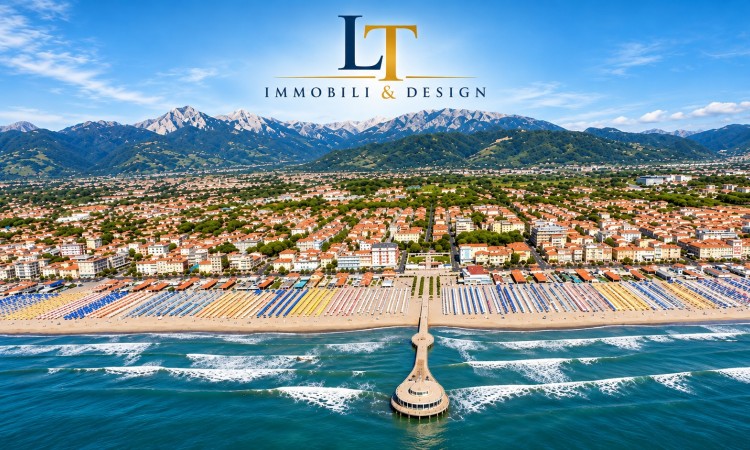
Luxury Looks at Millions. Families Count the Monthly Payments.
Luxury Looks at Millions. Families Count the Monthly Payments.
In Versilia, multimillion-euro properties exist alongside families carefully balancing the cost of everyday life. Two realities within the same property market, best understood through reliable figures, but above all through the people behind them.
Just a few kilometres apart, two people are looking for a home.
The first is considering a villa worth several million euros. Location, privacy, architecture and those distinctive features that make a property genuinely special are central to the decision. Price matters, of course, but it is not necessarily the main obstacle.
The second is sitting at the kitchen table, looking at a computer screen. They have found an apartment that could be just right: enough space, the neighbourhood they had hoped for and a seemingly reasonable asking price. Before calling the estate agent, however, they open a mortgage calculator. And that is when the calculations begin.
These are imagined situations, yet they reflect realities that coexist within the same property market. On one side are buyers whose choices are supported by substantial wealth; on the other are those who must shape their plans around their household finances. They are not opposing worlds, but people with different needs and means, united by the desire to find a home that meets their expectations.
And while we continue to discuss how much properties are worth, perhaps we should also ask another question: how many people can still afford to buy the homes currently being offered for sale?
When the Cost of Living Meets the Cost of HousingIn recent years, the Italian property market has demonstrated remarkable resilience. According to ISTAT’s House Price Index, residential property prices rose by 4% in the second quarter of 2026 compared with the same period a year earlier. Over that period, however, the number of residential transactions increased by just 0.1%. Taken together, these figures illustrate why rising prices should not automatically be interpreted as evidence of a more active market.
Behind these percentages are people, with their own circumstances and concerns. In recent years, the cost of living has placed increasing pressure on household budgets, making it harder to save or take on new financial commitments. International tensions can add to this pressure by affecting energy prices, fuel costs and raw materials, with consequences that eventually reach transport, production and the everyday goods we purchase.
We explored this relationship in our earlier article, “Can the Property Market Ignore a War?”, considering how events taking place far beyond our borders can influence decisions about buying and selling property. Not every price increase is caused by conflict, of course, but geopolitical instability can contribute to higher energy costs and, in turn, affect household finances.
Official information published by ISTAT in English helps place these developments in context. Yet it does not take an economist to understand their practical consequences. When essential expenses rise, the money available for other plans may diminish. For many families, buying a home is one of the most significant financial commitments they will ever make.
This reveals an important contradiction: a property can retain its market value while becoming less affordable for some of the people who might wish to buy it.
The Same Home, a Different Mortgage PaymentMortgage costs make this difference particularly clear. During the exceptionally low interest-rate environment of 2020 and 2021, some fixed-rate mortgage offers carried rates close to 1%. Conditions have since changed, and the cost of borrowing remains an important consideration for prospective buyers, as reflected in the Bank of Italy’s official statistics.
Consider a mortgage of €200,000, repayable over 30 years. At a hypothetical fixed nominal interest rate of 1%, the monthly repayment would be approximately €643. At 3.5%, it would rise to around €898 — a difference of €255 each month, or more than €3,000 a year. These are illustrative calculations based on a standard repayment mortgage, excluding additional costs; they are not quotations from current lenders.
The more revealing comparison, however, concerns purchasing power. A household able to commit approximately €900 a month to mortgage repayments could, over 30 years, theoretically borrow around €280,000 at 1%. At 3.5%, the amount would fall to approximately €200,000. That is almost €80,000 less borrowing capacity for essentially the same monthly commitment. Actual lending decisions naturally depend on income, available deposits and the lender’s assessment.
For someone searching for a home, that difference may mean giving up an extra bedroom, considering another neighbourhood or postponing the purchase altogether. Not necessarily because their needs have changed, but because the financial conditions required to meet them have.
This also helps explain why property prices can continue to rise even when some households find it increasingly difficult to buy. Not every purchaser relies on a mortgage: some use accumulated savings, others sell an existing property, draw on family wealth or invest capital from abroad. Where the supply of desirable homes is limited, prices may remain firm even when fewer buyers are able to participate.
The property market, in other words, does not follow a single rule. Understanding these differences becomes particularly important when moving from national statistics to the realities of a specific location.
Versilia and the Two Speeds of Its Property MarketVersilia offers an interesting example of this complexity. In Forte dei Marmi, particularly in its most prestigious neighbourhoods, certain properties appeal to Italian and international buyers seeking qualities that are difficult to replicate: location, privacy, architectural character and living spaces offering something genuinely distinctive. In these transactions, mortgage costs may carry relatively little weight compared with the purchaser’s available wealth.
Just a few kilometres away, in Viareggio, Camaiore or Massarosa, a significant part of the residential market serves families who live and work locally. For these buyers, the purchase price must be considered alongside household income, savings and the affordability of any mortgage.
Of course, this is not an absolute geographical divide. Viareggio also has exceptional luxury properties, just as Forte dei Marmi has homes outside the prime market. The real distinction lies in the type of buyer a property is likely to attract and the motivations behind the purchase.
This is one of the aspects I consider particularly important in the work of an estate agent: understanding not only the characteristics of a property, but also the people to whom it may appeal. An apartment intended for a young couple and an exceptional villa may be located within the same area, yet respond to very different economic circumstances.
Property valuations also require careful interpretation. Asking prices published on leading property portals reflect sellers’ expectations and do not necessarily correspond to the amounts ultimately agreed in completed transactions. The Italian Revenue Agency’s Property Market Observatory (OMI) provides useful territorial reference information, but no general price range can replace an assessment of an individual property’s characteristics.
A home with exceptional qualities may command a price considerably above the usual levels for its area. Conversely, a high asking price does not, in itself, make a property exclusive. The word luxury alone cannot make a home unique.
Similarly, a residential property that is realistically valued, thoughtfully presented and suited to buyers’ needs can continue to attract interest even during a challenging economic period. This is why valuing a home should never be reduced to a simple price-per-square-metre calculation. Its setting, the demand it may attract and the qualities that distinguish it all deserve consideration.
Naturally, sellers wish to achieve the best possible result. It is a legitimate expectation, deserving both respect and attention. But the value attached to a property must eventually meet a buyer who is willing — and financially able — to recognise it. A successful transaction begins when those two perspectives find common ground.
The 2027 Property Market: What Might Change?Looking towards 2027, I believe it is important to remain cautious. Property market forecasts are often presented with considerable confidence, yet prices depend on many variables, some of which are difficult to anticipate.
The Bank of Italy’s Survey on the Housing Market offers a useful perspective on estate agents’ expectations, negotiations and selling times. Such information helps us understand market conditions, but it cannot tell us with certainty what will happen next.
If household purchasing power remains under pressure and borrowing costs continue to affect family budgets, some parts of the residential market may find it harder to sustain further price increases. This could lead to longer selling periods, more involved negotiations or, in certain circumstances, a need to reconsider initial asking prices.
It would not necessarily mean a widespread decline in property values. Highly desirable homes, in sought-after locations and with qualities that are difficult to replicate, may continue to attract strong interest. Others may require greater care in setting the asking price and developing an appropriate sales strategy.
I do not know whether residential property prices will fall in 2027. Indeed, I am wary of forecasts that claim to describe the future of such a varied market with certainty. What I do believe is that the value of a home cannot be considered entirely separately from the financial circumstances of the people who may wish to buy it.
This is a consideration for sellers and buyers alike. Owners are entitled to seek the best return on their property, just as purchasers are entitled to look for a home that fits their means. Part of an estate agent’s responsibility is to understand both perspectives and help people make informed, realistic decisions.
Perhaps 2027 will not be remembered as the year house prices fell. It may simply be a year in which it becomes even clearer that not all properties — and, above all, not all buyers — move at the same pace.
Because the property market may continue to ask for more. But that does not mean everyone can continue to pay more.
The considerations regarding 2027 describe possible scenarios rather than firm predictions. The national economic and property data cited should not be interpreted as specific measurements of completed property transaction prices in Versilia.
