

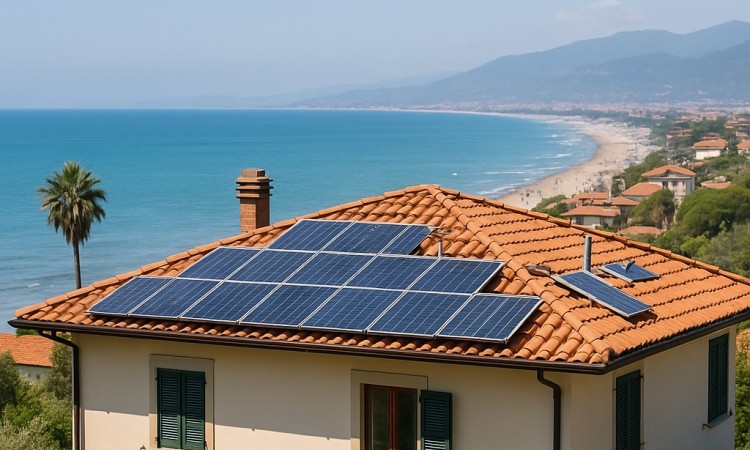
Energy Efficiency 2025: The New Frontier of Real Estate Value
How sustainability is once again driving market choices
After the years of the Superbonus and extraordinary incentives, the topic of energy efficiency has entered a more mature phase.
It’s no longer just about tax benefits and deductions, but about widespread awareness: an efficient property — well insulated, with modern systems — is worth more, sells faster, and costs less to maintain.
In 2025, sustainability returns to the center of real estate evaluation, alongside location, size, and construction quality.
A structural, not just regulatory, change
The evolution of the market no longer depends solely on government incentives, but on a broader cultural transformation.
Buyers today are more informed, attentive to performance, and aware that a higher energy class is not only an environmental advantage but also a tangible, long-term financial benefit.
Recent data from Enea and Nomisma confirm this trend: homes with an energy class A or B sell up to 25% faster than lower-rated properties.
Energy efficiency is no longer a niche feature — it has become a market standard.
The new European rules and the 2030 targets
The European “Green Homes” Directive, approved in 2024 and currently being implemented in Italy, sets ambitious targets:
-
by 2030, all residential buildings must reach at least energy class E;
-
by 2033, the goal rises to class D;
-
for public buildings and condominiums, the deadlines are even tighter and supported by targeted incentives.
This means that low-performing “energy-hungry” properties will gradually lose market value, while efficient or upgraded homes will gain it.
The idea of “real estate value” is increasingly tied to a property’s ability to deliver low consumption and high comfort.
Incentives still available in 2025
Even after the end of the Superbonus 110%, several important support measures remain active for homeowners who wish to improve their property’s performance:
-
50% Renovation Bonus: valid for extraordinary maintenance work, including replacement of windows, heating systems, and fixtures.
-
65% Ecobonus: for energy improvements such as insulation, solar panels, heat pumps, and home automation systems.
-
Green Bonus and Mobility Bonus: for outdoor areas and electric vehicle charging points.
-
Sismabonus and Condominium Ecobonus: still available for integrated renovation projects in multi-unit buildings.
Unlike in the past, these interventions are now seen as part of standard property upkeep, not as exceptional opportunities.
What this means for sellers and buyers
For sellers
-
Presenting a property with an updated energy performance certificate (APE) and transparent utility data is now a major advantage.
-
Buyers are increasingly sensitive to energy consumption and comfort: a well-insulated home with efficient systems retains its value over time.
-
In many areas, energy performance can impact the final selling price by up to 10–15%.
For buyers
-
Choosing an energy-efficient home is not only an ethical decision but also a financial safeguard.
-
Annual operating costs for an A-rated property can be as little as one-third of those for a G-rated home.
-
When evaluating a purchase, it is essential to consider not only the energy class but also the quality of systems, insulation, and installed technologies.
A new awareness of living
Sustainability is no longer a label — it’s a measurable component of real estate value.
The market rewards homes that combine comfort, efficiency, and durability.
In Tuscany — particularly in the Versilia and Lucchesia areas — demand is growing for high-efficiency homes, often featuring solar panels, heat pumps, and mechanical ventilation systems.
These properties reflect a new way of living: modern, conscious, and in harmony with the environment.
Efficiency as a long-term investment
The real estate value of the future will increasingly be measured in kilowatt-hours.
An efficient building not only consumes less but also preserves its market appeal over time.
Investing in energy efficiency today means protecting one’s assets and strengthening one’s position in an evolving market.
Energy efficiency is no longer a cost — it’s a strategic investment that defines living quality and enhances the credibility of anyone presenting a home built for the future.
