

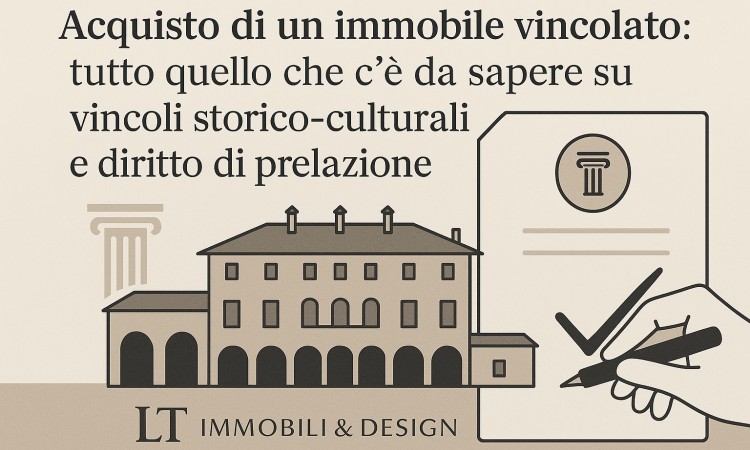
Buying a Listed Property in Italy.
Buying a Listed Property in Italy: How Cultural-Heritage Restrictions and Pre-emption Rights Work
Buying a listed property—one that is protected due to its historical or cultural value—can be a fascinating and rewarding experience. These properties often have significant architectural and historical appeal. However, it’s essential to understand that the sale of such properties follows a specific legal process under Italian law. In this article, I’ll walk you through how the purchase of a listed property works, what restrictions apply, and what role the Ministry of Culture plays in exercising its pre-emption right.
⸻
What is a listed property?
A property is considered “listed” (or subject to protection) when the Italian State recognizes it as being of historical, artistic, or cultural interest. The applicable legislation is the Italian Cultural Heritage and Landscape Code (Legislative Decree no. 42 of January 22, 2004, formerly Law no. 1089/1939).
The listing may apply to:
• the entire building;
• a specific part of it (such as the facade or interior);
• or the land on which it stands.
⸻
What does this mean when selling or buying such a property?
When you want to sell a listed property, you cannot follow the standard sale procedure. Instead, Italian law imposes certain formalities to ensure that public institutions—such as the Ministry of Culture—have the opportunity to step in and purchase the property under the same conditions as the private buyer. This is known as the pre-emption right.
⸻
What is the pre-emption right of the Ministry of Culture?
The pre-emption right gives the Ministry (or other authorized public entities such as local governments) the ability to match the offer of a private buyer and become the purchaser of the property instead. This right must be exercised within 60 days of receiving notice of the intended sale.
⸻
Step-by-step guide to buying a listed property
1. Drafting the preliminary agreement or purchase proposal
A standard preliminary contract or offer is signed, but it includes a suspensive condition: the sale will only be effective if the Ministry does not exercise its right of pre-emption.
2. Notification to the Ministry (Article 59 of the Code)
The seller (or the notary) must send a formal notification of the sale to the Ministry of Culture, including full details of the buyer, price, and conditions.
3. Start of the 60-day period
From the date of receipt, the Ministry has 60 days to decide whether or not to exercise its pre-emption right.
4. Possible outcomes:
• No response within 60 days → The right is considered waived, and the sale can proceed as planned.
• Exercise of the right → The Ministry (or another public body) replaces the private buyer and finalizes the purchase under the same terms.
5. Payment and deed signing
During the 60-day waiting period, any deposit or initial payment is typically held in escrow by the notary and not released to the seller until the Ministry’s decision is confirmed.
⸻
Why does this process matter?
Buying a listed property can be a fantastic opportunity—but only if you understand the implications, delays, and possible outcomes. Being aware of these restrictions from the start can help you avoid surprises and plan your investment wisely.
⸻
Interested in a protected property?
Work with a professional who knows the ins and outs of these transactions. At LT Immobili, we support our clients throughout the process, offering legal guidance and technical advice to ensure every step is clear, secure, and efficient.
⸻
Giovanni Larini
LT Immobili – Via della Gronda 306, Viareggio
Expertise, care, and passion—for every home, especially those with a story to tell.
