

The Viareggio Carnival: Tradition, History, and Spectacle
The Viareggio Carnival is one of the most emblematic and historic events in Italy, with roots dating back to 1873 when a group of wealthy young men decided to organize a parade of decorated carriages to celebrate Mardi Gras. Since then, the event has grown in fame and scale, becoming an unmissable appointment for lovers of tradition and carnival culture.
The Origins of the Viareggio CarnivalThe first official parade took place on February 25, 1873, along Via Regia, in the heart of old Viareggio. This initiative arose from the enthusiasm of some young people eager to celebrate Carnival in an original way, giving birth to a tradition that has solidified over time. In 1921, Carnival took on an even more festive dimension with the introduction of music: a marching band found its place on a float called "Le nozze di Tonin di Burio," animating the parade with engaging melodies. In 1925, thanks to the inventiveness of painter Antonio D'Arliano, the papier-mâché technique was introduced, allowing for the creation of increasingly large and scenic floats.
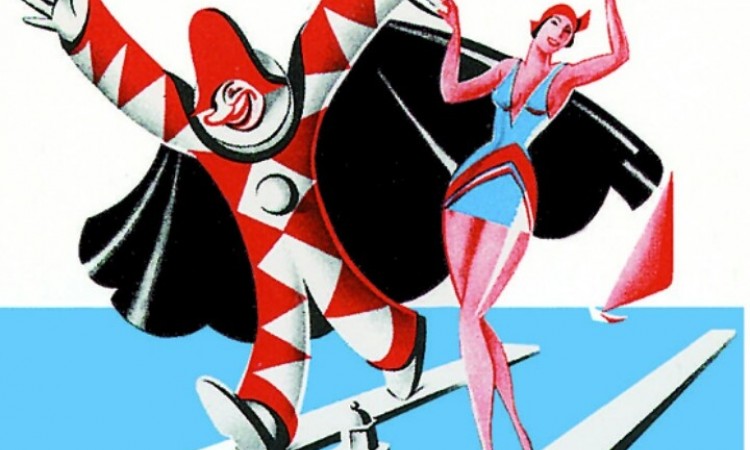
The Birth of BurlamaccoOne of the undisputed symbols of the Viareggio Carnival is Burlamacco, the official mask of the event. Created in 1930 by the futurist painter from Viareggio, Uberto Bonetti, Burlamacco made its first appearance in the 1931 Carnival poster, accompanied by the figure of Ondina, a bathing beauty symbolizing summer. Bonetti designed Burlamacco drawing inspiration from the main masks of the Italian Commedia dell'Arte: the red and white checkered costume recalls Harlequin, the black cape is a tribute to Doctor Balanzone, while the hat resembles that of Rugantino. The name "Burlamacco" could derive from the "Burlamacca" canal that crosses Viareggio or be a reference to the character Buffalmacco from Giovanni Boccaccio's "Decameron."
The Creation of Papier-Mâché FloatsThe allegorical floats are the beating heart of the Viareggio Carnival. These towering structures, made of papier-mâché, can reach heights of over 20 meters and widths of about 12 meters. The papier-mâché technique, introduced in 1925, is a lightweight and malleable material, made from newspaper, water, glue, and flour, allowing for the creation of detailed and complex forms.
The construction of a float begins with the design of a detailed sketch. Then, a supporting structure made of wood and metal is built, onto which the figures are modeled in clay. From these, plaster molds are obtained, onto which layers of paper soaked in a glue and water mixture are applied. Once dry, the papier-mâché parts are assembled, painted, and mounted on the moving base. Some floats can host up to 200 performers, who animate the parade with dances and songs.
The Carnival Museum and Papier-MâchéTo immerse oneself in the history and art of the Viareggio Carnival, a visit to the Carnival Museum is essential. Located within the Carnival Citadel, the museum exhibits models of the winning floats from various editions, official posters, and original works by artists linked to the event. Additionally, it offers educational workshops where visitors can learn papier-mâché crafting techniques.
The Viareggio Carnival: Event ScheduleThe Viareggio Carnival unfolds through a series of events called "Corsi Mascherati," parades of allegorical floats that take place along the promenade. The parades can occur both during the day and at night, creating suggestive atmospheres thanks to light and music effects. Carnival days are enlivened by neighborhood festivals, theatrical events, and musical performances, engaging the entire city in an atmosphere of joyful participation.
The "Rioni" and Neighborhood FestivalsThe "rioni" are the districts of Viareggio that, during Carnival, organize parties and local events. These neighborhood festivals represent the popular soul of the event, with dances, music, tastings of traditional dishes, and masked parades that animate the streets and squares of the various districts, creating an atmosphere of community and joy.
The Fireworks ShowAt the end of the last "Corso Mascherato," after the announcement of the winning floats, the Viareggio Carnival concludes with a grand fireworks display along the promenade. This event represents the climax of the festivities, illuminating the night sky and bidding farewell to the audience with an explosion of colors and lights.
The Viareggio Carnival represents a celebration of creativity, art, and tradition, engaging the entire community in an internationally renowned event.
