

The History of Viareggio: Between Sea, Art, and Tradition
Viareggio, nestled on the Tuscan coast, is a city of timeless charm that has deep roots in maritime history and artistic culture. Famous for its Liberty-style promenade and renowned Carnival, this town has evolved over time while maintaining a strong connection to its traditions and architectural heritage.
The Origins and History of ViareggioThe origins of Viareggio date back to the 12th century when it became a maritime outlet for the Republic of Lucca. The city's name is believed to derive from "via regis," the road that connected Lucca to the sea. However, it was only in the 16th century that Viareggio began to develop as a port city and a strategic center for trade and fishing. The construction of the Torre Matilde in 1534, still visible today, served as a defensive element against pirate raids.
In the 19th century, with the growth of maritime activities and the construction of the first bathing establishments, Viareggio transformed into one of the most sought-after tourist destinations on the Tuscan coast. The city gained fame as an aristocratic holiday resort, also attracting artists and intellectuals who chose it as their residence.
During the 20th century, Viareggio was struck by two major fires that devastated parts of its architectural heritage, but the city managed to rebuild with new Liberty-style constructions, which still characterize the promenade today.
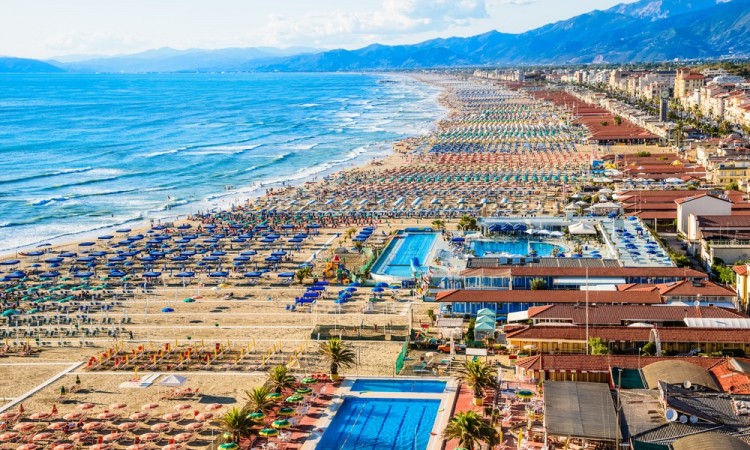
The Territory and Social ContextSituated between the Tyrrhenian Sea and the Apuan Alps, Viareggio boasts a territory rich in biodiversity and breathtaking landscapes. Its golden beaches stretch for kilometers, while the inland areas feature high-value natural reserves, such as the Migliarino, San Rossore, and Massaciuccoli Natural Park, which hosts a diverse fauna and offers numerous outdoor activities.
From a social perspective, Viareggio has always maintained a strong identity linked to the sea and local traditions. The city is a multicultural hub, thanks to its tourist appeal that draws visitors from all over Italy and abroad. Fishing, shipbuilding, and tourism are the most significant economic sectors, while cultural activities, such as the Carnival and the Puccini Festival, contribute to keeping the city's artistic scene alive.
Architectural Heritage and Liberty StyleOne of Viareggio's most distinctive features is its architectural heritage, heavily influenced by the Liberty style. The promenade is dotted with buildings and structures built between the late 19th and early 20th centuries, a period when the city became one of Italy's most prestigious seaside resorts.
Among the most iconic buildings are the Gran Caffè Margherita, Villa Argentina, and Hotel Excelsior, authentic works of art that showcase the elegance of a bygone era. The wrought-iron decorations, mosaics, richly adorned facades, and sinuous lines characteristic of the Liberty style make these buildings a true architectural treasure.
Over the years, many buildings have been restored to preserve their historical and artistic value, while some new architectural interventions have successfully blended modernity with tradition.
Main Economic ActivitiesIn addition to seaside tourism, Viareggio is an important hub for shipbuilding. Its shipyards are among the most renowned internationally for the production of luxury yachts and boats. Fishing, though reduced compared to the past, remains a significant sector, with one of the most well-supplied fish markets in the region.
Cultural and recreational activities are another strength of the city. The Viareggio Carnival, with its majestic papier-mâché floats, is one of the most anticipated events of the year, attracting thousands of visitors. Each year, master float builders create monumental works that parade along the promenade, addressing current issues with irony and creativity.
Summer is enlivened by musical and theatrical events, including the Puccini Festival in Torre del Lago, dedicated to the famous composer Giacomo Puccini, who lived in this area. The festival attracts enthusiasts from all over the world, offering top-tier performances in the picturesque setting of Lake Massaciuccoli.
In addition to cultural events, the city boasts a lively commercial scene, with high-end fashion boutiques, artisan shops, and local markets enriching the tourist offer.
Trabaccolara Cuisine: A Maritime TraditionViareggio’s culinary tradition is deeply rooted in seafood, and one of its most representative dishes is cucina trabaccolara. This dish has humble origins and takes its name from the "trabaccoli," the boats used by Marche fishermen who settled in Viareggio in the past century.
It is a fish soup originally made to avoid wasting the less prized catch, cooked with tomatoes, garlic, parsley, and white wine. Over time, cucina trabaccolara has become a sought-after specialty in local restaurants, symbolizing the simplicity and authenticity of Viareggio's gastronomy.
The Role of the Sea in Viareggio’s LifeThe sea has always been a central element in Viareggio’s life. Not only as a tourist attraction but also as a source of livelihood for many generations. The city hosts one of the most important fishing fleets in Tuscany, with a fish market that supplies fresh seafood to the region’s major locations.
The port of Viareggio is also a reference point for recreational boating and the production of luxury boats. Viareggio’s shipyards are renowned worldwide for the construction of high-end yachts, employing thousands of skilled workers.
