

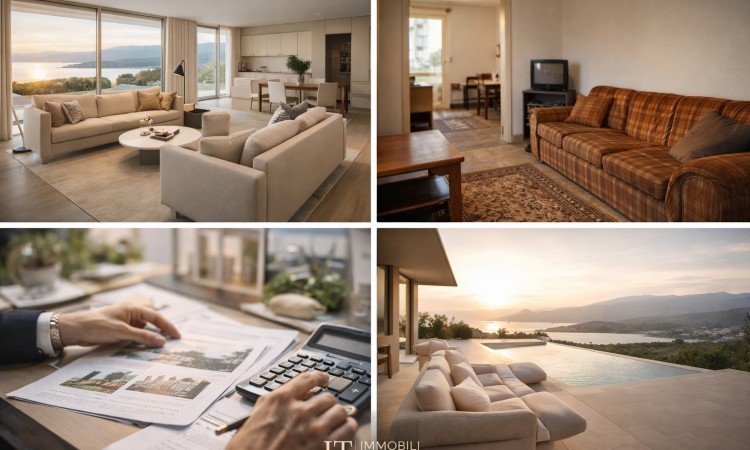
When a house seems expensive but actually isn’t
When a house seems expensive but actually isn’t
The first reaction: price perception
When buyers encounter a property, their first reaction is almost instinctive:
“It’s too expensive” or “it’s reasonable.”
Price is the first filter through which a property is perceived.
But it is also one of the most misunderstood elements in real estate.
Because a property can feel expensive at first glance…
and yet be perfectly aligned with its true value.
Price is never absolute
One of the most common misconceptions is that price is objective.
In reality, price is always the result of a relationship between:
• location
• property quality
• layout and functionality
• overall market conditions
Two properties may look similar on paper, yet differ significantly in value.
And very often, the cheaper option is not the better one.
The hidden cost of “cheap” properties
Buyers are naturally attracted to what appears to be a good deal.
However, lower-priced properties often come with hidden compromises:
• renovation costs
• poor energy efficiency
• outdated layouts
• less desirable locations
Over time, these factors can turn an apparently convenient purchase into a less efficient investment.
Long-term value vs short-term perception
A property that seems expensive today may actually represent a stronger long-term decision.
Homes with strong fundamentals — location, quality and balance — tend to:
• preserve value over time
• resell more easily
• attract more consistent demand
This is why price should never be evaluated in isolation, but always in perspective.
Experience reshapes perception
An interesting dynamic in real estate is how perception evolves.
As buyers visit multiple properties, they begin to understand the market more clearly.
What initially felt expensive can later appear well positioned — or even attractive.
Value is often revealed through comparison.
The LT Immobili & Design perspective
In our daily work, we frequently encounter properties that are initially perceived as overpriced.
But when analyzed properly — in terms of context, quality and potential — their value becomes evident.
Because in real estate, the key question is not:
“How much does this property cost?”
But rather:
“What is this property truly worth over time?”
