

Italian cuisine becomes a UNESCO Heritage: Versilia tells Italy’s story at the table
The recent recognition of Italian cuisine as a UNESCO Intangible Cultural Heritage of Humanity marks a historic milestone. For the first time, it is not a single dish or culinary technique being celebrated, but an entire cultural system made of traditions, family rituals, seasonality and a deep connection to the land.
Italian cuisine is acknowledged as a universal language — one that tells the story of a country through everyday gestures, recipes passed down through generations, local ingredients and the social value of sharing a meal. Within this framework, regional cuisines play a fundamental role.
Among them, Versilian cuisine stands out as a perfect example of how sea, countryside and hills come together to create a strong and authentic gastronomic identity.
Versilia: a territory told through food
Versilia is not only about beaches and landscapes. It is a land shaped by the balance between fishing, agriculture and family life. Its cuisine originates from necessity and seasonality, with a remarkable ability to transform simple ingredients into memorable dishes.
It is a genuine, recognisable and convivial cuisine, deeply rooted in everyday life and festive occasions alike — a living heritage fully aligned with the values UNESCO aims to protect.
Iconic dishes of Versilian cuisine
Tordelli versiliesi: a family tradition
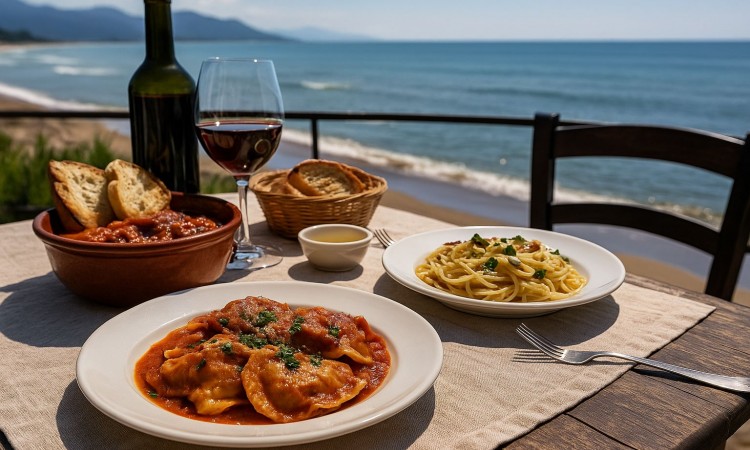
The tordelli versiliesi (with a “d”) are the most emblematic dish of the area. Found throughout historical Versilia, they are traditionally prepared for celebrations and family gatherings.
Handmade pasta, a rich meat filling, slow-cooked ragù: every family has its own version, making tordelli a true expression of local identity and culinary heritage.
Spaghetti with arselle: the sea on the plate
Spaghetti alle arselle represent the maritime soul of Versilia. Arselle — small clams traditionally harvested close to shore — are paired with olive oil, garlic and white wine, creating a dish that relies on balance and simplicity.
It is the taste of summer, of seaside lunches and unhurried time.
Cacciucco: the character of the coast
The cacciucco, Versilia-style, preserves the bold character of Tuscan coastal cuisine while offering slightly more delicate nuances. A rich fish stew served with toasted bread, born as humble fishermen’s food and now a symbol of conviviality and tradition.
A living cultural heritage
Beyond its most famous dishes, Versilian cuisine includes many lesser-known preparations that combine sea and land, vegetables, olive oil and seasonal products. This culinary heritage is not just about food, but about identity, memory and community.
That is precisely what the UNESCO recognition celebrates.
Cuisine, territory and lifestyle
Today, food plays a key role in territorial appeal. People increasingly choose where to live, invest or spend extended periods based on quality of life and cultural authenticity.
In this sense, Versilia offers more than beautiful properties and landscapes: it offers a genuine way of life, rooted in traditions that are still alive.
Italian cuisine is a UNESCO heritage because it is made of territories.
Versilian cuisine is one of the territories that makes this recognition truly meaningful.
