

Cadastral Categories in Italy: A Practical Guide to Understanding Property Classification
In the real estate world, knowing which cadastral category a property falls under is essential to assess its fiscal value, intended use, and the taxes that apply. This guide will help you navigate the main cadastral classifications in Italy, explained clearly for anyone working in or exploring the property sector.
What are cadastral categories?
Cadastral categories are the system used by the Italian State to classify properties. Each category defines the intended useof a property and determines its cadastral income, which is the fiscal value used to calculate taxes such as IMU, TASI, IRPEF, or registration tax.
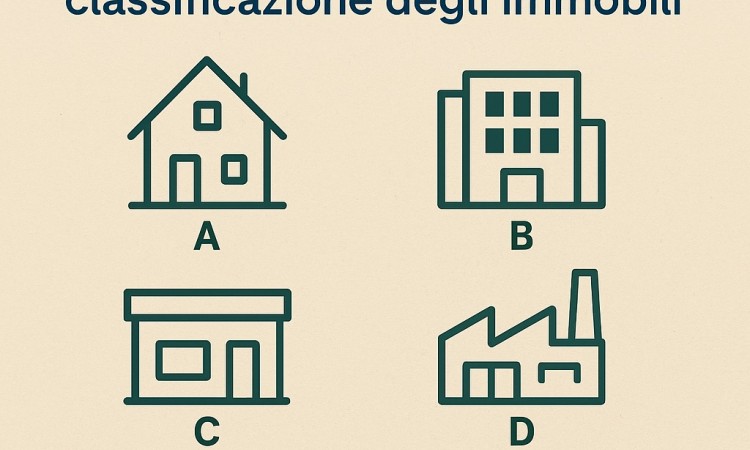
There are six main groups:
-
Group A: Residential properties and similar buildings
-
Group B: Collective facilities (schools, hospitals, convents, etc.)
-
Group C: Commercial spaces, garages, and storage units
-
Group D: Industrial buildings or properties with a specific economic function
-
Group E: Public infrastructure and special-purpose facilities
-
Group F: Properties under construction or without a defined use
Residential Properties: Group A
Categories from A/1 to A/11 cover all types of residential properties, from basic apartments to historic villas. Some examples include:
-
A/2: Standard residential apartments (the most common type)
-
A/3: Low-income housing
-
A/7: Small villas
-
A/8: Large or historic villas
-
A/10: Offices and professional studios (note: these are not residential)
Knowing the cadastral category of a home is also useful to determine eligibility for certain tax bonuses.
Public and Service Properties: Group B
Group B includes properties used for public or collective services. Examples:
-
B/5: Schools
-
B/2: Hospitals
-
B/1, B/3: Barracks, convents, prisons
-
B/6: Libraries and museums
-
B/7: Private chapels or oratories not open to the public
Shops, Garages, Workshops: Group C
If you own or manage a commercial property, it likely falls under Group C:
-
C/1: Shops and retail spaces
-
C/2: Warehouses and storage units
-
C/3: Artisan or craft workshops
-
C/6: Garages and private parking spaces
This classification is crucial when selling or leasing for commercial use.
Industrial Buildings: Group D
This group includes buildings intended for industrial or economic activity. For example:
-
D/1: Factories and industrial plants
-
D/2: Hotels and guest accommodations
-
D/5: Banks and insurance offices
-
D/7: Industrial buildings with specialized use
Cadastral income for these properties is often determined through expert appraisals.
Infrastructure and Public Works: Group E
This group includes facilities used exclusively for public or technical purposes, such as:
-
E/1: Railway stations
-
E/2: Bridges, canals, aqueducts
-
E/8: Power plants and public utility facilities
Properties Under Construction: Group F
Group F includes properties that are not yet completed or do not yet have a defined use:
-
F/2: Under construction
-
F/3: In the process of definition
-
F/4: Awaiting declaration
These categories do not have cadastral income and do not generate taxes until completion.
Why is knowing the cadastral category important?
Whether you’re buying a home, renting a commercial space, or selling a warehouse, knowing the property’s cadastral classification is key. It affects:
-
The taxes you will pay
-
The tax incentives or bonuses you may be eligible for
-
The marketability of the property
-
Zoning regulations and allowed future uses
If you’re unsure, it’s always wise to consult a qualified professional (such as a surveyor, architect, or engineer) or speak with your trusted real estate agent.
