

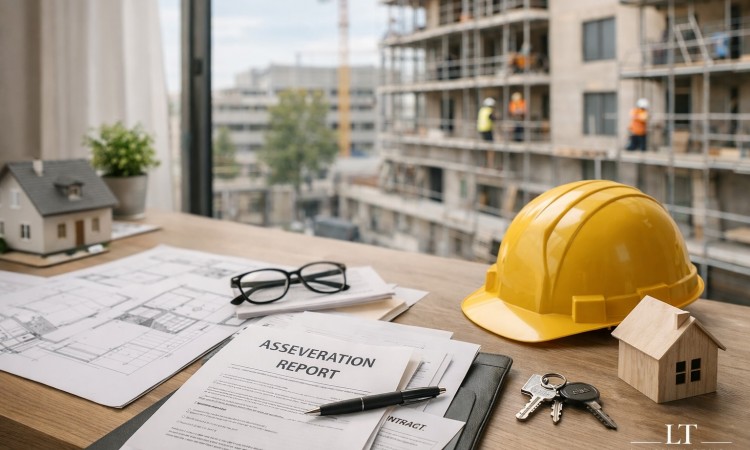
Buying an Apartment in a Condominium Renovated with the 110% Superbonus: What to Check to
Buying an Apartment in a Condominium Renovated with the 110% Superbonus: What to Check to Avoid Risks
Superbonus 110% and Property Purchases: What an Informed Buyer Should Know
In recent years, many condominium buildings in Italy have carried out energy-efficiency and seismic improvement works thanks to the 110% Superbonus incentive.
For those considering purchasing an apartment in a building affected by these works, the question is entirely legitimate:
“Could I be exposed to potential irregularities? What should I verify before signing?”
The answer is neither alarmist nor superficial.
Buying in a condominium that benefited from the Superbonus can be an excellent opportunity — but it requires accurate due diligence.
⸻
The First Principle: Responsibility Is Not Automatically Transferred, But Verification Is Essential
It is important to clarify one point:
any audits or tax assessments by the Agenzia delle Entrate (Italian Revenue Agency) generally concern:
• the condominium as beneficiary,
• the building administrator,
• the technical professionals who issued certifications,
• the construction company.
However, a buyer enters an already structured condominium framework and must ensure that:
• the works were properly approved,
• technical certifications were correctly issued,
• there are no ongoing disputes,
• there are no hidden financial liabilities.
Purchasing without verification means exposing yourself to indirect risks.
⸻
Which Documents Should Be Requested Before Buying
Below is a practical checklist of the essential documents to review.
1. Condominium Assembly Resolutions
Request copies of the assembly resolutions approving:
• the renovation works,
• the selection of the construction company,
• the decision regarding tax credit transfer or invoice discount.
Verify that they were approved with the legal majorities required at the time.
⸻
2. Contract with the Construction Company
Carefully review:
• total contract value,
• any variations,
• work progress status,
• liability and warranty clauses.
⸻
3. Technical Certifications (Asseverazioni)
The appointed professionals must have filed:
• compliance certification of technical requirements,
• certification of cost adequacy,
• pre- and post-intervention Energy Performance Certificates (EPC), where required.
These documents are central in the event of tax audits.
⸻
4. ENEA Communications
Confirm that all documentation was properly submitted to ENEA within the legally required deadlines.
⸻
5. Status of the Tax Credit
Clarify whether:
• the tax credit has been transferred,
• it has been accepted by a bank or financial institution,
• there are suspensions or blocks.
An unresolved credit can create financial tension within the condominium.
⸻
6. Condominium Financial Position
Request from the administrator:
• a statement confirming that payments are up to date,
• details of any outstanding extraordinary installments,
• information about disputes with contractors or technicians.
⸻
What Happens If Irregularities Emerge?
The Superbonus legislation has undergone several amendments.
In the event of an audit, the Italian Revenue Agency may contest:
• improper use of the tax credit,
• false certifications,
• inflated or non-compliant costs.
Primary liability generally falls on those who directly benefited from the credit or issued inaccurate declarations.
However, a condominium involved in tax litigation may face:
• credit suspension,
• repayment claims,
• financial instability.
This can indirectly affect property values within the building.
Preventive verification is therefore a form of asset protection.
⸻
Buying While Works Are Still Ongoing
If the renovation works are not yet completed, it is crucial to clarify:
• who bears potential additional costs,
• how future installments are allocated,
• whether there are pending certified work progress reports (SAL),
• whether the seller remains responsible for prior obligations.
These aspects should be contractually regulated in the preliminary agreement.
⸻
The Real Risk Is Not the Superbonus — It Is Superficiality
Many properties renovated under the Superbonus now offer:
• improved energy ratings,
• thermal insulation systems,
• new heating systems,
• reduced energy consumption.
From a patrimonial perspective, they may represent strong value.
The risk arises when the buyer focuses only on the final result and ignores the administrative process behind it.
⸻
The Proper Method: Technical and Fiscal Due Diligence
Before signing:
• involve a trusted technical professional,
• consult with your notary,
• request complete documentation from the administrator,
• verify the absence of disputes.
At LT Immobili & Design, preventive verification is an integral part of our advisory process.
It is not merely a legal matter — it is a matter of protecting value.
⸻
Final Consideration: Yes to Opportunity, Yes to Awareness
Buying an apartment in a condominium that benefited from the 110% Superbonus is not inherently risky.
It becomes risky only when documentation, procedures, and financial stability are not carefully reviewed.
Today’s selective market rewards informed buyers —
and penalizes rushed decisions.
